Zennials: the Second Liminal Generation
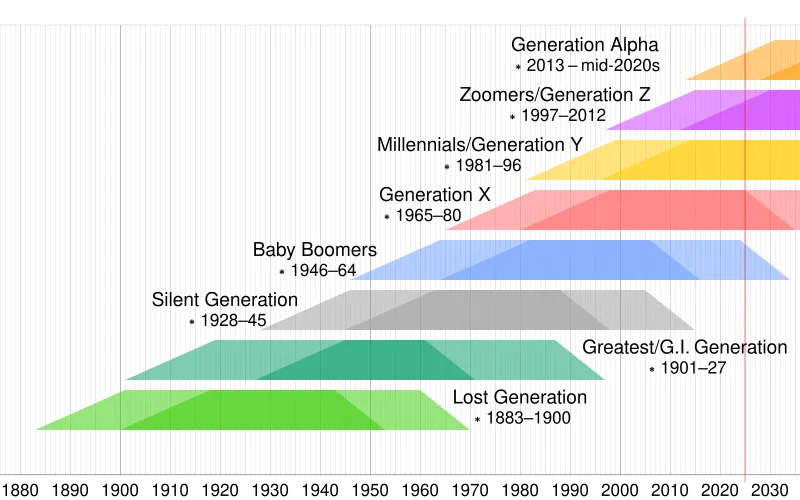
If we are to take Postman, Adam’s, and the Futurists understanding of technology and movement as generation defining. Then we should do the same for the second “micro generation” following the Xennials our spiritual in-betweener/existential ancestors. But due to the internet and the smartphone our window was much shorter in duration as Gen X. ~1995-2000
Jason Dorsey, president of The Center for Generational Kinetics, described zillennials as "equal parts idealistic and skeptical, analog roots with digital instincts" and that "they probably remember life before smartphones, but not before the internet."
"the differences within generations can be just as great as the differences across generations, and the youngest and oldest within a commonly defined cohort may feel more in common with bordering generations than the one to which they are assigned." - Pew Research
Zillennials were too young for full understanding of the geopolitical context or the gravity of the 9/11 terrorist attacks, but grew up in the significant aftermath that helped shape their worldview. They came of age in the 2010s, with the Brexit referendum and U.S. presidential election of 2016, COVID-19 pandemic and the 2020–2021 George Floyd protests being key formative events.[17] They remember life in the early 2000s before smartphones,[7] then experienced the sudden global Digital Revolution of the late 2000s and 2010s, navigating mobile LTE internet, cell phones, mobile devices and smartphones.[14] Zillennials code-switch between generations - Wikipedia
Zennials (or "Zillennials") are the micro-generation born on the cusp of the Millennial and Gen Z eras, typically between 1992 and 2002. In 2026, they are often described as "economic inbetweeners" because they occupy a unique financial purgatory: they are too young to have built equity during the pre-pandemic era but often too established to qualify for the entry-level support now being targeted at Gen Z.
Here is how the Zennial "inbetweener" status manifests in today's economy:
- The "Lock-In" Paradox
While older Millennials may have bought homes at 3% interest rates and Gen Z is largely still renting or living at home, Zennials are often stuck in the middle. Many started their "adult" careers just as inflation and housing prices spiked.
The Struggle: They have enough savings to want a home, but not enough to compete with all-cash offers or 7% mortgage rates.
The Result: They are the primary residents of the "luxury rental" market—earning good salaries but unable to convert that income into generational wealth.
- Digital Fluency vs. AI Displacement
Zennials are the last group to remember a "pre-smartphone" childhood while being the first to enter a fully remote/hybrid workforce.
Millennial Trait: They value the traditional "career ladder" and professional stability.
Gen Z Trait: They are hyper-adaptive to new tech like Generative AI.
The In-between: In 2026, they often find themselves "middle management" in a world where AI is automating the entry-level tasks they once used to prove their worth, creating a bottleneck for their upward mobility.
- The "Soft Pivot" Spending Habit
Zennials exhibit a unique spending profile often called "Affordable Affluence." Unlike Millennials, who were defined by "Avocado Toast" stereotypes, or Gen Z’s "Doom Spending," Zennials are pragmatic.
Selective Frugality: They are 79% more likely to wait for sales or use AI "deal-finder" tools, yet they will splurge on "micro-luxuries" (like high-end skincare or niche travel) to offset the fact that major milestones (like house ownership) feel delayed.
- Financial Outlook Comparison (2026)
Despite the "inbetweener" squeeze, Zennials are currently the most resilient cohort in the 2026 labor market. Their "double-fluency" in both legacy corporate culture and emerging tech makes them the "glue" in modern workplaces. They are the ones translating Gen Z's needs to Boomer bosses, often commanding high salaries for this social and technical agility. - Gemini
Abundance-Mamdani types do seem to be touching this nerve. Housing inaffordability exacerbates the liminal nihilism that the Zennial intuitively understands by vibe alone.